
President Droupadi Murmu has given her assent to the Public Examinations (Prevention of Unfair Means) Amendment Bill, 2026, which introduces fast-track courts and significantly enhances punishment for those involved in public examination question paper leaks.

The Congress party has criticised Prime Minister Narendra Modi's announcement of fast-track courts for paper leak cases, calling it "too little, too late" and a "deceptive" measure. The party demands accountability from the Modi government for its alleged failures in preventing and investigating paper leaks, specifically citing issues with the NEET-UG and UGC-NET investigations.
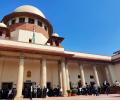
As of December 2025, India had 880 Fast-Track Courts with 1.39 million pending cases, despite disposing of 1.33 million cases during the year.

Prime Minister Narendra Modi has announced comprehensive reforms in the education system to combat paper leaks, following the passage of a new anti-paper leak law. He asserted that there would be no leniency for those involved in examination irregularities, highlighting the government's commitment to ensuring fair opportunities for students.

Parliament on Thursday passed a bill to amend the anti-paper leak law to introduce stricter punishments, with the government expressing its commitment to go the extra mile to safeguard the interests of students, who are the country's future.

The Lok Sabha has approved an amendment to India's anti-paper leak law, introducing stricter punishments including jail terms of up to 10 years and fines of up to Rs 50 lakh, in response to recent large-scale student protests and the NEET paper leak case.

Beyond imprisonment, candidates caught cheating face cancellation of examination scores, blacklisting under China's social credit system and multi-year bans from appearing in state examinations.

The Lok Sabha stalemate is expected to conclude as Speaker Om Birla has secured an agreement from all political parties to discuss the Public Examination (Prevention of Unfair Means) Amendment Bill 2026. This bill proposes stricter punishments, including up to 10 years in jail and a Rs 50 lakh fine, for paper leak offences, following recent nationwide student protests over the NEET fiasco.

The Union Cabinet has approved a draft bill to introduce stricter punishments for examination paper leaks, following Prime Minister Narendra Modi's announcement. This new legislation builds upon the Public Examinations (Prevention of Unfair Means) Act, 2024, aiming to curb cheating in public examinations conducted by various central agencies amidst recent controversies like the NEET and NET paper leaks.

Prime Minister Narendra Modi has affirmed strong action against NEET paper leak culprits and urged state governments to collaborate with the Centre to prevent future incidents, emphasising national interest over party politics. He highlighted the successful re-examination and arrests made.

India is set to introduce a new amendment to its anti-paper leak law in the Lok Sabha, aiming to establish fast-track courts across all states and union territories for swift trials and significantly harsher penalties for exam malpractices, including jail terms of 5 to 10 years and fines up to Rs 50 lakh for individuals, and up to Rs 10 crore for organised crimes.

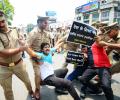
After six days of stalemate, a discussion on the anti-paper leak bill began on Tuesday in Lok Sabha with the government describing it as a reaffirmation of ruling dispensation's commitment to safeguard the welfare of students but opposition hit back over the lathi-charge on protesters, saying every blow on them hurt the government's prestige more than the backs of the youth.

Monday's proceedings demonstrated that the legislative debate has become inseparable from the broader political crisis surrounding the NEET controversy.

Amidst widespread student protests over the NEET paper leak, the Indian government has introduced the Public Examinations (Prevention of Unfair Means) Amendment Bill, 2026, in the Lok Sabha. The bill proposes significantly stricter punishments, including jail terms of up to 10 years and fines of up to Rs 50 lakh for individuals involved in paper leaks, and up to Rs 10 crore for organised crimes, aiming to enhance transparency and fairness in public examinations.

The Public Examination (Prevention of Unfair Means) Amendment Bill, 2026, passed by the Lok Sabha, introduces significantly stricter punishments for individuals and organised groups involved in paper leaks and other unfair means in public examinations. The legislation aims to enhance the integrity of exams conducted by various central government agencies.

Actor Dia Mirza has criticised Prime Minister Narendra Modi's delayed and unempathetic response to ongoing student protests concerning alleged NEET exam irregularities and paper leaks. She highlighted his focus on fast-track courts over addressing the emotional distress of affected students and parents.

The National Testing Agency (NTA) has strongly refuted social media claims regarding an alleged leak or sale of the NEET-UG 2026 re-examination question paper, labelling them as 'false, fraudulent, and intended to mislead' by 'organised cheating rackets'.

The three National Testing Agency (NTA) subject experts breached an "obligation of secrecy" and circulated the question papers of the NEET UG exam, said the the chargesheet filed by the Central Bureau of Investigation before a Delhi court.

Congress leader Rahul Gandhi has strongly criticised the Indian government's temporary restriction on Telegram ahead of the NEET-UG re-examination, calling it a 'new trick' that punishes students instead of tackling the root cause of paper leaks. He highlighted the suicides of two students, Umesh and Riya, linking their deaths to the 'broken, corrupt system' and the government's alleged failure to protect students from exam mismanagement.

Prime Minister Narendra Modi has announced stringent measures, including the establishment of fast-track courts, to combat exam paper leaks and protect the future of India's youth, following widespread protests over the NEET paper leak.

The Congress party has criticised Prime Minister Narendra Modi's recent video message on paper leaks as an 'eyewash', demanding the sacking of Union Education Minister Dharmendra Pradhan and accountability for the alleged brutality against student protestors. The party highlighted the government's initial denial of the NEET-UG 2026 leak and its perceived failure to address widespread irregularities.

The BJP is significantly increasing its digital engagement with young people on Instagram, led by Prime Minister Narendra Modi and several Union ministers, in response to the NEET-UG paper leak controversy and subsequent student protests. This strategic shift aims to counter the narrative and communicate government actions on examination reforms.

The Congress party, through Deputy Leader Gaurav Gogoi, has criticised the proposed amendments to India's anti-paper leaks law, arguing that previous legislation has failed to prevent examination leaks. Gogoi highlighted the ongoing student protests and questioned the government's sincerity, particularly regarding the handling of the NEET fiasco and the welcome given to former Education Minister Dharmendra Pradhan. He also raised concerns about the National Testing Agency's accountability.

RJD leader Tejashwi Yadav was detained in Patna during a protest march concerning police action related to NEET paper leak protests in Bihar. Yadav, along with RJD workers, was protesting against frequent exam paper leaks, stating that the government is jeopardising students' futures.

The Indian government has significantly altered its approach to the Cockroach Janata Party (CJP)-led agitation over the NEET paper leak, moving from dismissal to calibrated political engagement, including promises of fast-track courts, a new anti-paper leak law, and negotiations with key protest leaders.

Prime Minister Narendra Modi announced a new bill to introduce strict laws against paper leaks, following public demand and student protests. The announcement was made via an Instagram video that also set a new world record for views.

Holding Home Minister Amit Shah responsible for alleged police brutalities on protesting students, Leader of the Opposition in the Rajya Sabha Mallikarjun Kharge on Thursday said that "Jan Shakti" (people's power) will "drag him out" one day to make him accountable.

The Lok Sabha's monsoon session concluded on Thursday, marked by relentless opposition protests over critical issues like the NEET paper leak and police action on students, yet saw the passage of several key bills without extensive debate. Home Minister Amit Shah expressed readiness to debate the student protest issue, urging the speaker to allocate time.

Amidst escalating protests over the NEET paper leak, the Cockroach Janta Party (CJP) has declared Education Minister Dharmendra Pradhan's resignation 'non-negotiable' and is also demanding 1 crore compensation for families affected by suicides linked to the exam cancellation.

Union Education Minister Dharmendra Pradhan has resigned following weeks of widespread protests and public outrage over examination paper leaks, particularly the NEET-UG controversy, leading to jubilant scenes at Jantar Mantar as demonstrators declared 'victory'.

Congress leader Rahul Gandhi on Monday dubbed Prime Minister Narendra Modi as the "most anti-youth" PM in the country's history as he accused the government of not just failing the youth but also pouncing on them.

Three more persons were arrested on Sunday in connection with the violence during a protest here two days ago against the NEET paper leak, taking the total number of apprehended people to 14, the police said.

Union Education Minister Dharmendra Pradhan has resigned from his post amidst widespread nationwide protests concerning the NEET-UG 2026 paper leak controversy, citing the larger interest of students and the need to prevent exploitation by anti-national forces. The government is also preparing to introduce a stringent anti-paper leak law.

A 19-year-old medical aspirant, Ankita Suresh Sangle, allegedly died by suicide in Jalalpur after being disheartened by her NEET re-examination score of 166 marks, while the family of another aspirant, Akanksha Chaturvedi, who died earlier, demanded justice and compensation, calling for top government leadership resignations amidst the ongoing NEET paper leak controversy.

The Congress escalated its campaign against alleged examination irregularities by marching to Prime Minister Narendra Modi's residence, transforming the issue into a direct challenge to his political authority and demanding the resignations of top government officials.

Opposition parties, particularly the Congress, have strongly criticised the BJP for felicitating former Union Education Minister Dharmendra Pradhan, who resigned following student protests over the NEET exam controversy. They have also dismissed the government's proposed anti-paper leak legislation as a 'cosmetic Bill' and questioned the sincerity of education reforms.

Opposition parties have submitted notices in the Rajya Sabha demanding an urgent discussion on the alleged use of force, including pellet guns, against students protesting the NEET paper leak issue. They are seeking accountability from the Home Minister and Prime Minister regarding the police action and alleged assault on protesters and journalists.

Congress leader Rahul Gandhi has strongly criticised the Modi government following the cancellation of the NEET (UG) 2026 examination, citing paper leaks and corruption.

The Cockroach Janta Party (CJP) has reiterated its demand for Union Education Minister Dharmendra Pradhan's resignation, stating that Prime Minister Narendra Modi's announcement on fast-track courts for paper leak cases does not address accountability.
The UGC-NET, 2024, exam for the selection of junior research fellows, assistant professors and PhD scholars was conducted by the National Testing Agency (NTA) on June 18 in two shifts across the country.
